

Some journeys are about reaching somewhere. Some are about slowing down. Paryushan is about the second kind. For the Jain community, these sacred days are a time to step back from everyday distractions, practise restraint, reflect on one’s actions, study Jain teachings, and most importantly, seek forgiveness. And while Paryushan is traditionally centred around spiritual practice rather than celebration, a Teerth Yatra can become a meaningful part of the experience for those who wish to visit Jain temples and pilgrimage sites. If you’re planning to travel during Paryushan, a self-drive road trip can make it possible to visit a nearby Jain teerth at your own pace, with family, elders or friends. This guide covers the two major Jain traditions, their important practices, and some Jain pilgrimage destinations that can be reached by road from cities whereBharat Self Driveoperates.
Two Major Jain Traditions During These Days
Paryushan is often spoken about as though every Jain community observes it in exactly the same way. That’s not quite accurate. The two major traditions have different names, structures and emphasis during this period.
1. Shwetambar Paryushan Parva
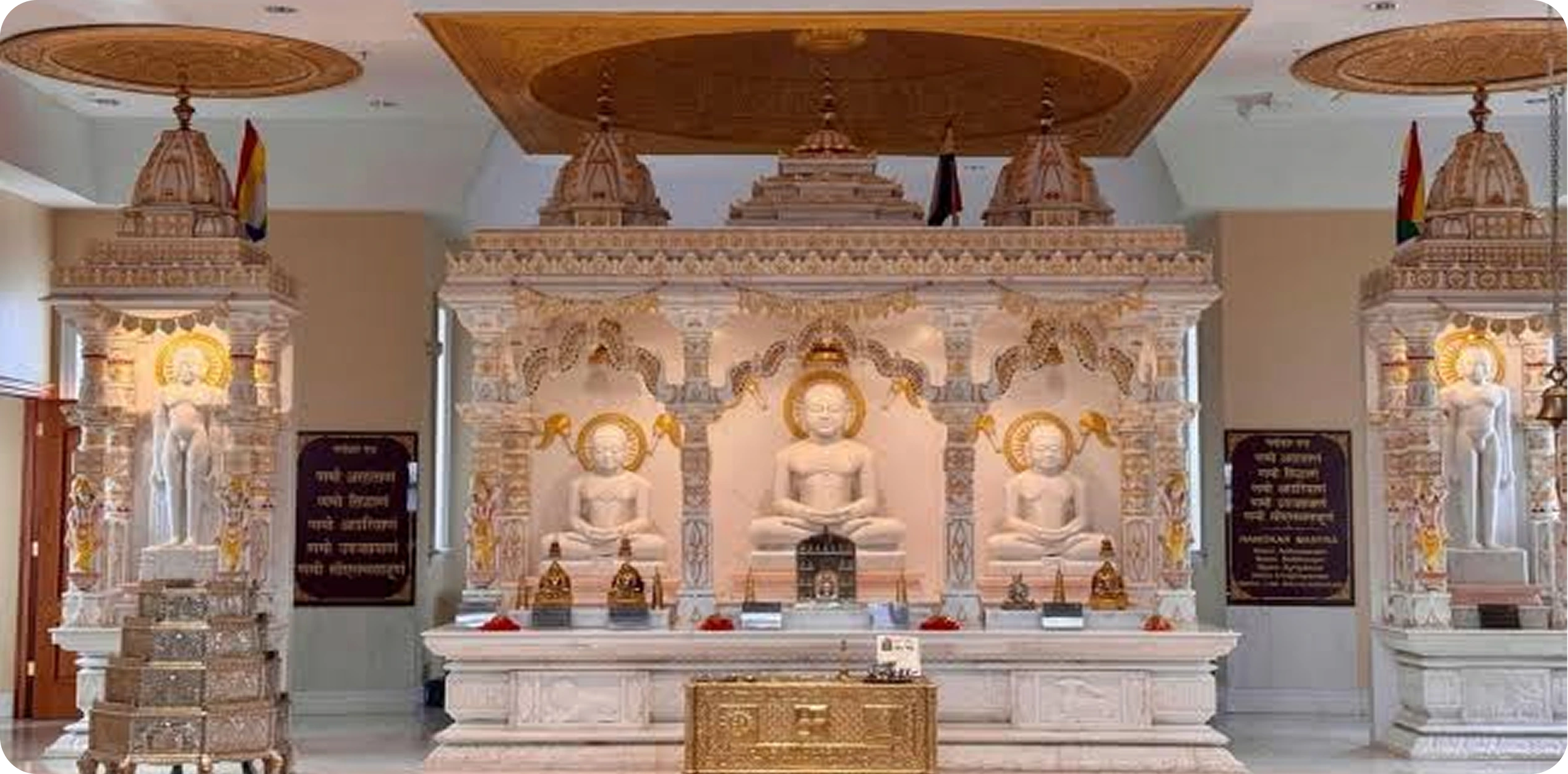
For Shwetambar Jains, Paryushan Parva is observed for eight days. These days are dedicated to turning inward through Fasting and other forms of tapas Pratikraman Swadhyay (scriptural study) Listening to religious discourses Reflection on one’s actions Reducing attachment and unnecessary indulgence Seeking forgiveness The Kalpa Sutra holds an important place during the observance, with readings traditionally taking place during Paryushan. The fourth day is also associated with the celebration of the birth of Bhagwan Mahavira through the Mahavira Janma Vachan tradition. Samvatsari: The Day of Forgiveness The final day, Samvatsari, is perhaps the most recognisable part of Paryushan. Devotees perform Samvatsari Pratikraman, reflecting on mistakes and transgressions and seeking forgiveness. This leads to the beautiful practice of saying “Michhami Dukkadam.” It expresses the intention: If I have hurt you knowingly or unknowingly through my thoughts, words or actions, I ask for your forgiveness. It’s not simply a festival greeting. It is an exercise in humility and reconciliation.
2. Digambar Das Lakshan Parva
The Digambar tradition observes Das Lakshan Parva, a ten-day spiritual observance. Rather than eight days of Paryushan, each of these ten days focuses on one of the ten supreme virtues (Dash Dharma) Uttam Kshama — Supreme Forgiveness Uttam Mardava — Supreme Humility Uttam Arjava — Supreme Straightforwardness Uttam Shaucha — Supreme Purity/Contentment Uttam Satya — Supreme Truth Uttam Sanyam — Supreme Self-restraint Uttam Tapa — Supreme Austerity Uttam Tyaga — Supreme Renunciation Uttam Akinchanya — Supreme Non-attachment Uttam Brahmacharya — Supreme Chastity The idea isn’t to simply memorise ten virtues. It is to contemplate them and try to bring them into everyday life. The observance concludes with Ananta Chaturdashi, followed by the Digambar forgiveness observance commonly known as Kshamavani.
What Happens During Paryushan?
There isn’t one single “Paryushan ritual.” It’s more like a period of several practices coming together. Tapas — Fasting & Austerity: Fasting is one of the most visible practices during Paryushan, but not everyone observes it in the same way. Depending on an individual’s vow and tradition, practices can include complete fasting, eating only once a day, or other forms of dietary restraint. Some undertake extended fasts such as Atthai, while others follow a simpler form of restraint. The important point is that fasting is meant to support self-discipline and spiritual reflection, not competition. Pratikraman — Looking Back: Pratikraman is essentially a practice of reflection. It gives a person an opportunity to look honestly at their thoughts, words and actions, recognise where they have gone wrong and resolve to do better. Swadhyay — Learning: Paryushan is also a period for studying and listening to Jain scriptures and teachings. The idea is simple, spiritual growth doesn’t happen only through rituals; understanding matters too. Forgiveness: And finally comes forgiveness. From asking others for forgiveness to forgiving others and oneself, the practice encourages people to let go of anger, ego and resentment. That’s arguably one of the most powerful lessons of Paryushan.
Teerth Yatra During Paryushan
A Teerth Yatra isn’t simply a sightseeing trip to a temple. For many devotees, visiting a Jain teerth is a way of creating space for prayer, reflection and connection with the community. And you don’t necessarily have to travel across the country. Depending on where you live, there are remarkable Jain pilgrimage destinations within driving distance.
From Bangalore: Shravanabelagola
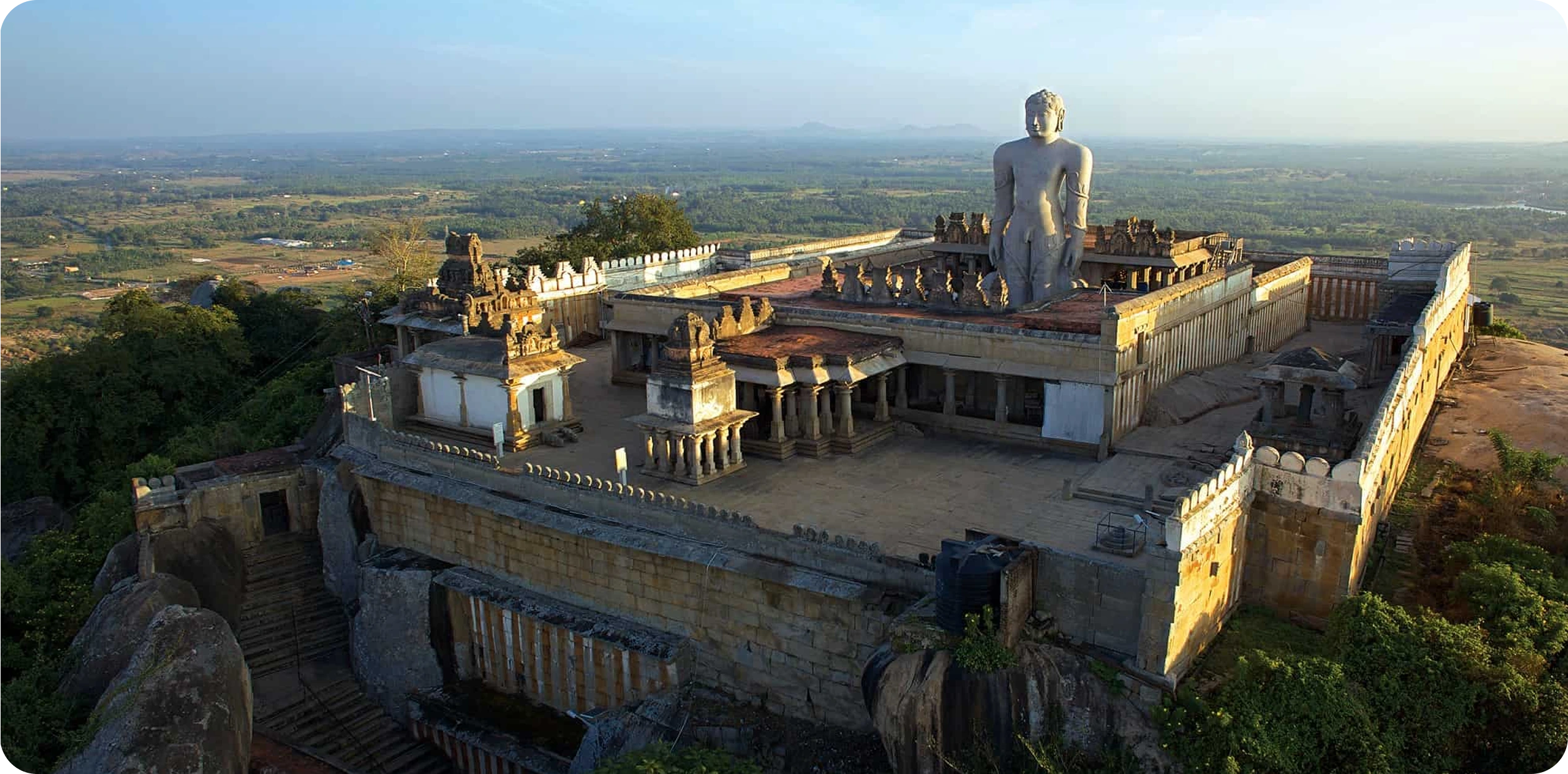
If you’re in Bangalore and want to make a meaningful Jain road trip, Shravanabelagola is hard to overlook. Located around 145 km from Bengaluru, the historic pilgrimage town is home to the 58-foot monolithic statue of Lord Bahubali (Gommateshwara) on Vindhyagiri Hill. The site also includes Jain basadis and Chandragiri Hill. The climb itself becomes part of the experience. There are hundreds of steps leading towards the statue, so plan the visit without rushing. If you’re travelling with family, you can book a comfortable self-drive car from Bharat Self Drive Bangalore and decide whether you want to make it a day trip or stay overnight. Book a Bharat self-drive car in Bangalore
Karkala Jain Heritage Circuit
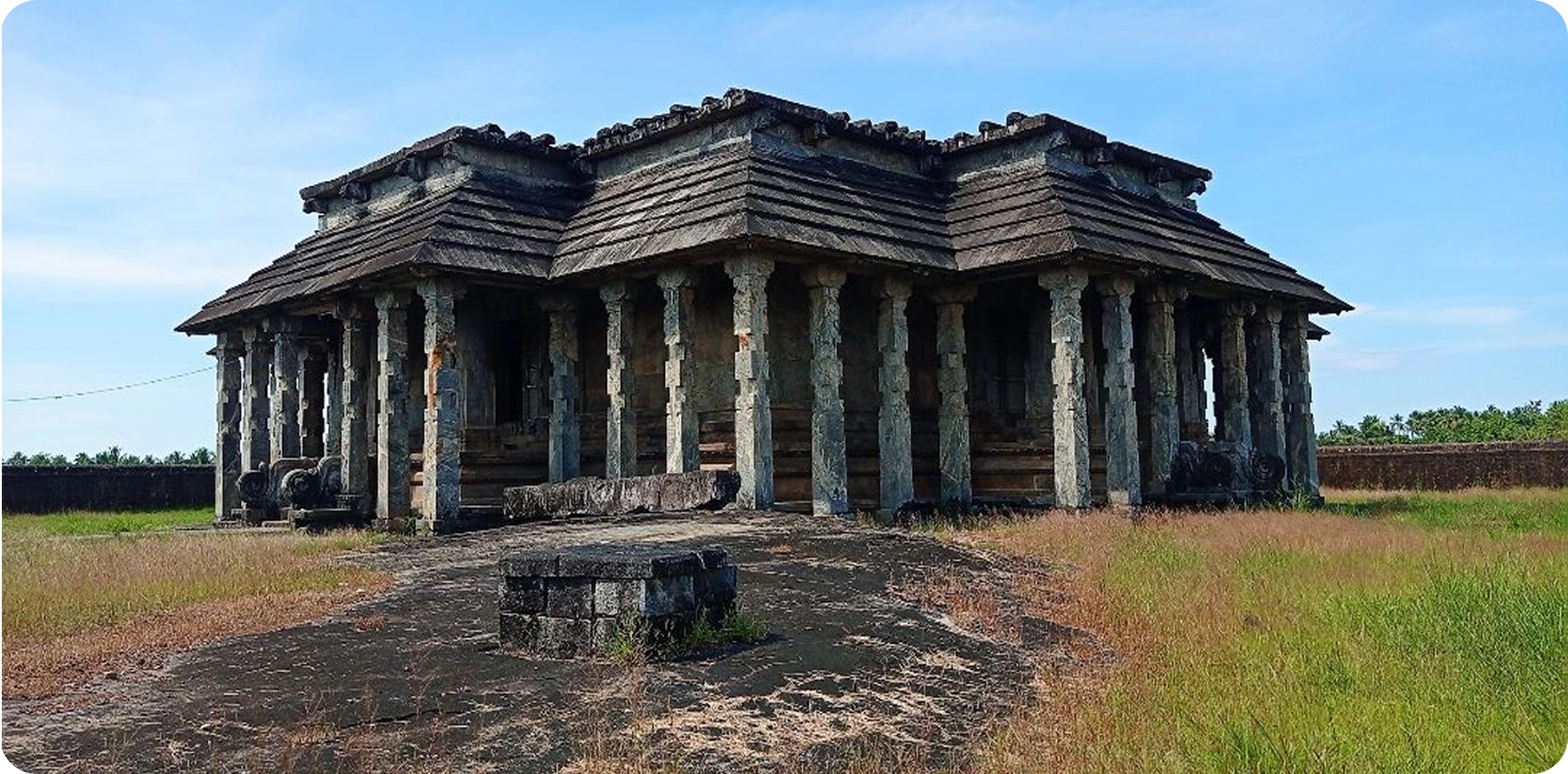
If you’re willing to drive farther from Bangalore, Karkala in coastal Karnataka offers a completely different Jain experience. The Chaturmukha Basadi is a 16th-century Jain temple with four entrances and 108 granite pillars. Karnataka Tourism also notes that the Gomateshwara statue is just around 1.4 km away, while Varanga’s Jain Basadi is around 27 km from Karkala. This is better as a 2–3 day road trip than a rushed one-day drive. You could combine Karkala with Udupi and other coastal Karnataka destinations.
From Hyderabad: Kolanupaka Jain Temple
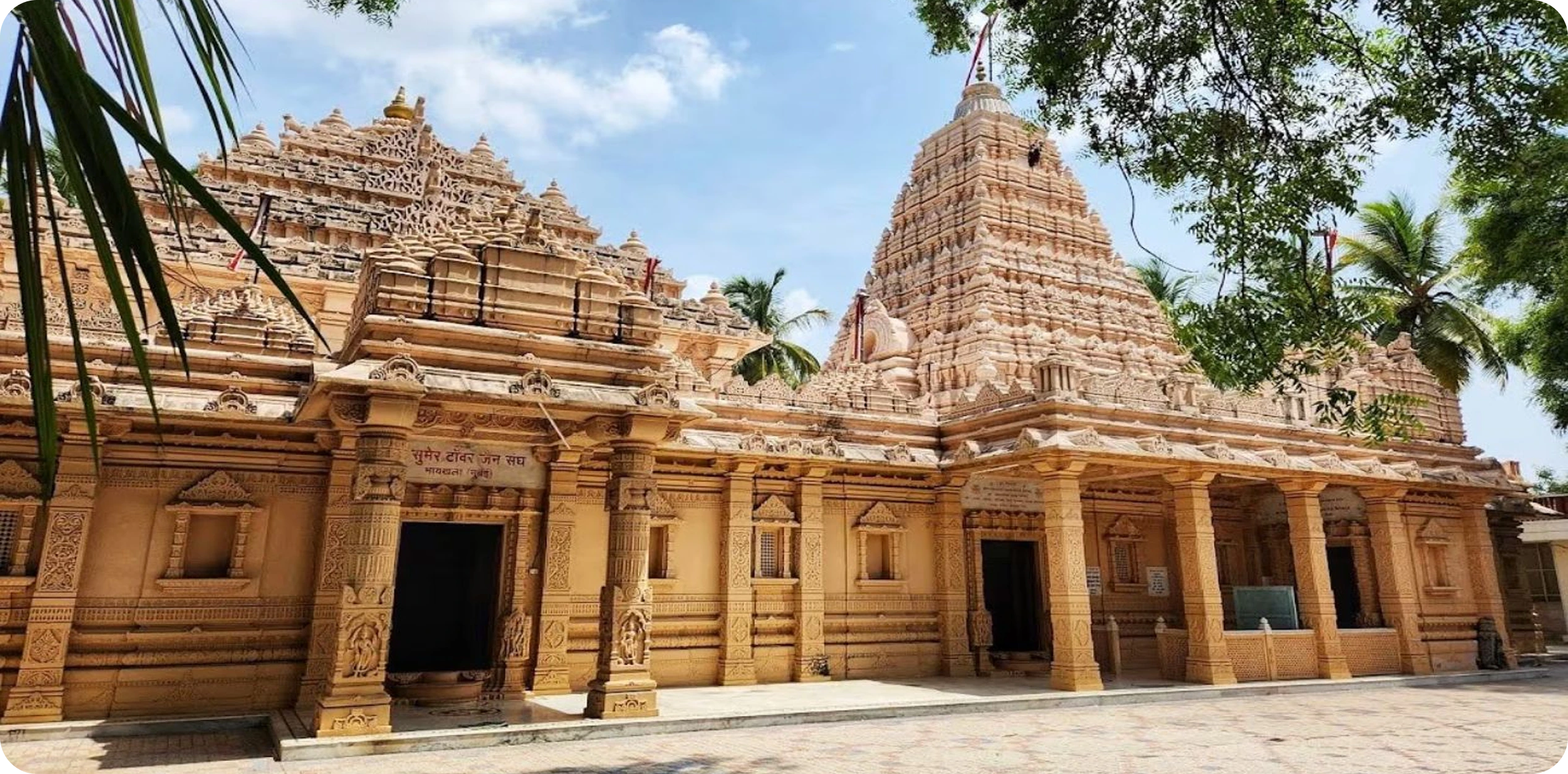
Around 77 km from Hyderabad, Kolanupaka is one of the most accessible Jain pilgrimage drives from the city. The temple houses idols of Rishabha, Neminath and Mahaveer, and the Telangana government describes it as an important pilgrimage centre for Shwetambar Jains in South India. The temple is on the Hyderabad–Warangal highway, making it a practical option for a day road trip.
From Ahmedabad: Taranga Jain Temple
Gujarat has a particularly deep Jain heritage, and Taranga Hill is one of the most beautiful places to experience it. Taranga is around 130 km from Ahmedabad and around 56 km from Mehsana. Gujarat Tourism notes that private vehicle travel is available from Ahmedabad and nearby cities. The hill setting makes the drive feel like more than a temple visit. You can leave Ahmedabad early, spend time at the temple and return the same day, or combine it with other North Gujarat destinations.
Palitana & Shatrunjaya Hill
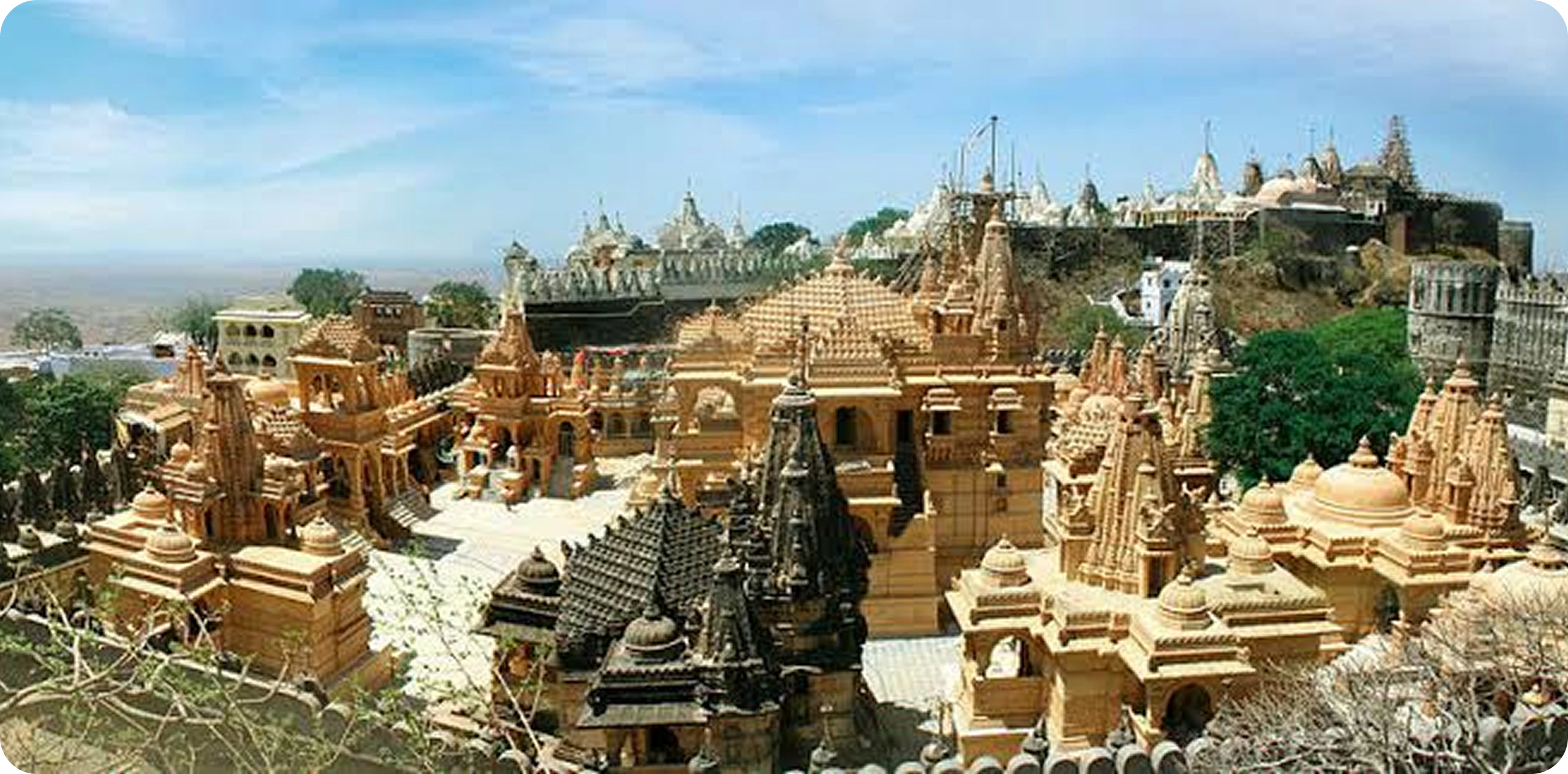
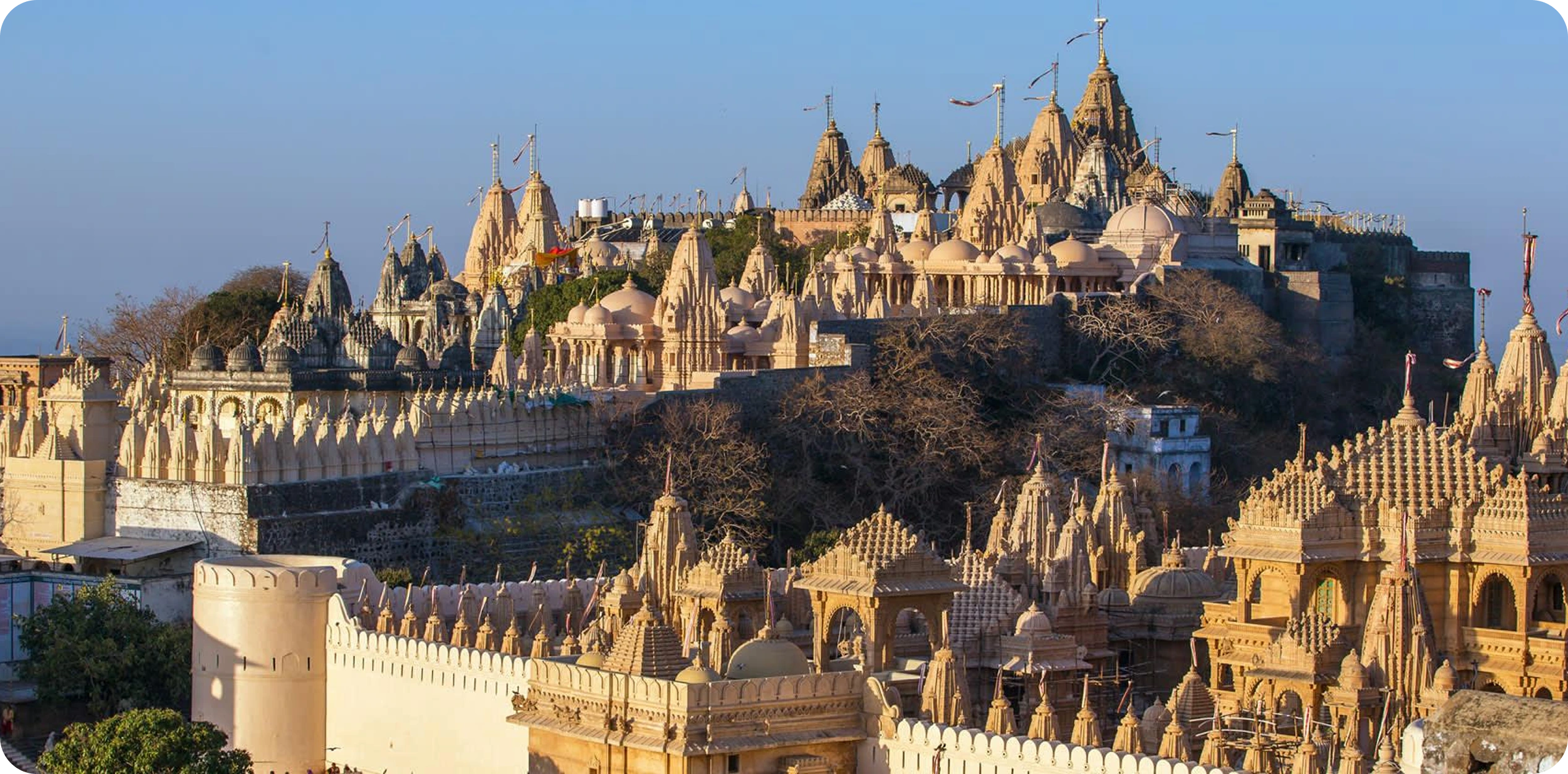
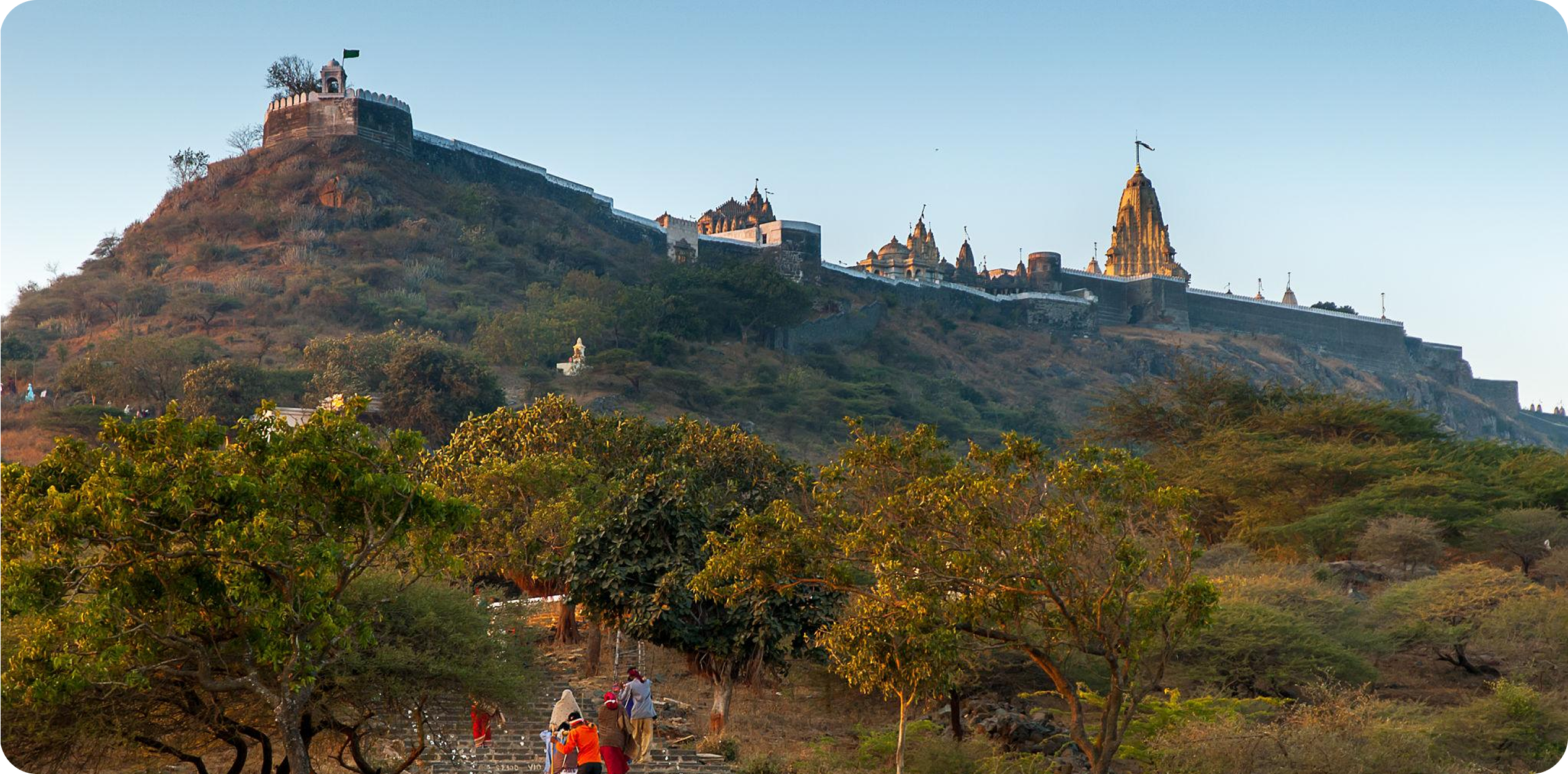
If you have more time, this is the bigger pilgrimage. Palitana’s Shatrunjaya Hill is among Jainism’s most important pilgrimage sites, with hundreds of temples spread across the hill. The climb involves more than 3,750 stone steps, so this is definitely not a casual stop on a road trip. Gujarat Tourism places Palitana around 5 hours by road from Ahmedabad, making it better suited to an overnight or multi-day journey rather than a rushed day trip.
From Pune/Mumbai: Ellora’s Jain Caves
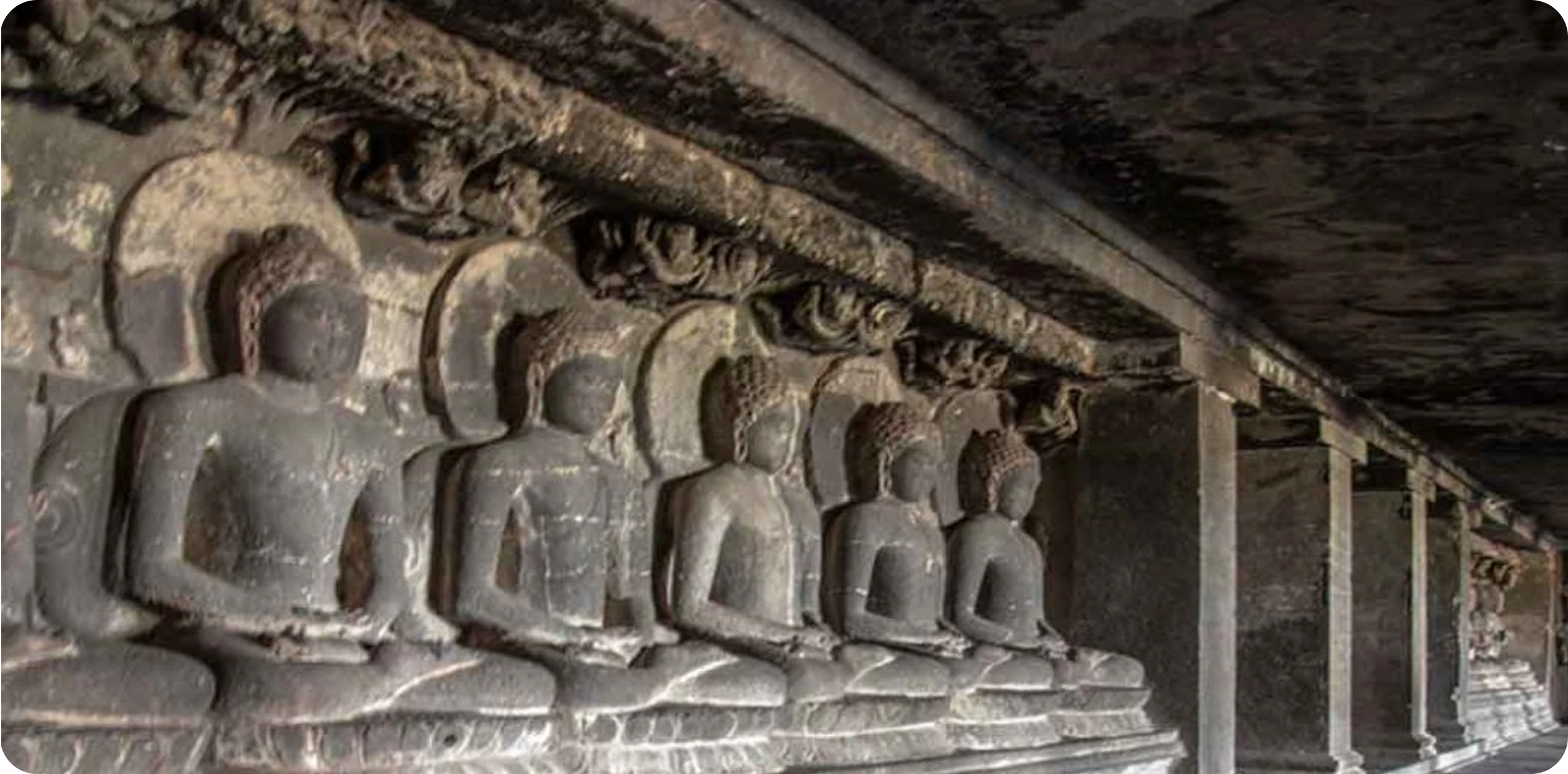
Here’s an interesting option for people in Pune or Mumbai. The Ellora Caves are not exclusively Jain, they bring together Buddhist, Hindu and Jain rock-cut traditions in one extraordinary complex. The five Jain caves at Ellora contain sculptures of Tirthankaras and other Jain imagery and are an important part of the site’s religious and artistic history. From Pune, this works well as a longer weekend road trip. Road trip idea: Pune → Chhatrapati Sambhajinagar → Ellora → Jain Caves → nearby heritage sites → Pune.
Planning Your Paryushan Road Trip With Bharat Self Drive
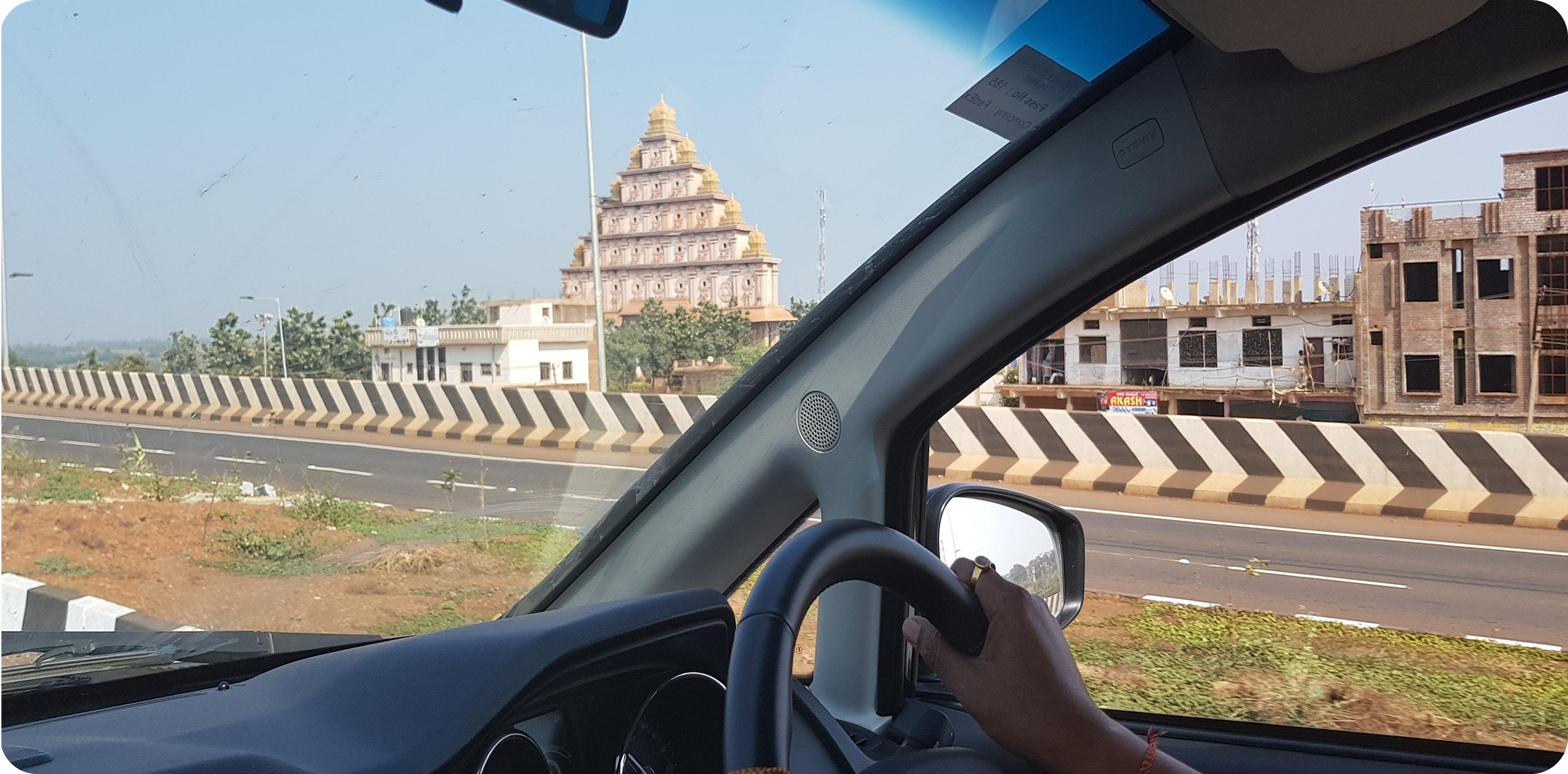
If you don’t own a car, that doesn’t necessarily mean you have to skip the road trip. With Bharat Self Drive, you can book a self-drive car for the duration you need and travel from your city at your own pace. For a nearby teerth, a one-day booking may be enough. For something farther away, you can book the car for multiple days and build the pilgrimage into a wider road trip. Before you leave: Check the temple’s timings and visitor guidelines. Confirm the dates and rituals followed by your local Jain community. Plan around fasting schedules if you’re observing a vrat. Start early for hill temples. Choose a comfortable vehicle if travelling with elders. Avoid rushing between multiple pilgrimage sites. Keep the journey peaceful and respectful. And remember that a Teerth Yatra is different from an ordinary weekend road trip. Dress appropriately, follow temple customs and avoid treating sacred spaces as photo stops.
Paryushan Is Ultimately About the Journey Within
You can drive 150 km. You can drive 500 km. You can climb thousands of steps. But none of that is the real measure of Paryushan. The deeper journey is quieter: less anger, less ego, more restraint, more awareness and the courage to say, “I was wrong. Please forgive me.” That’s what makes Paryushan so meaningful. Whether you spend these days at your neighbourhood Jain temple or take a road to a centuries-old teerth, the destination matters, but so does the intention with which you travel. Michhami Dukkadam. 🙏