

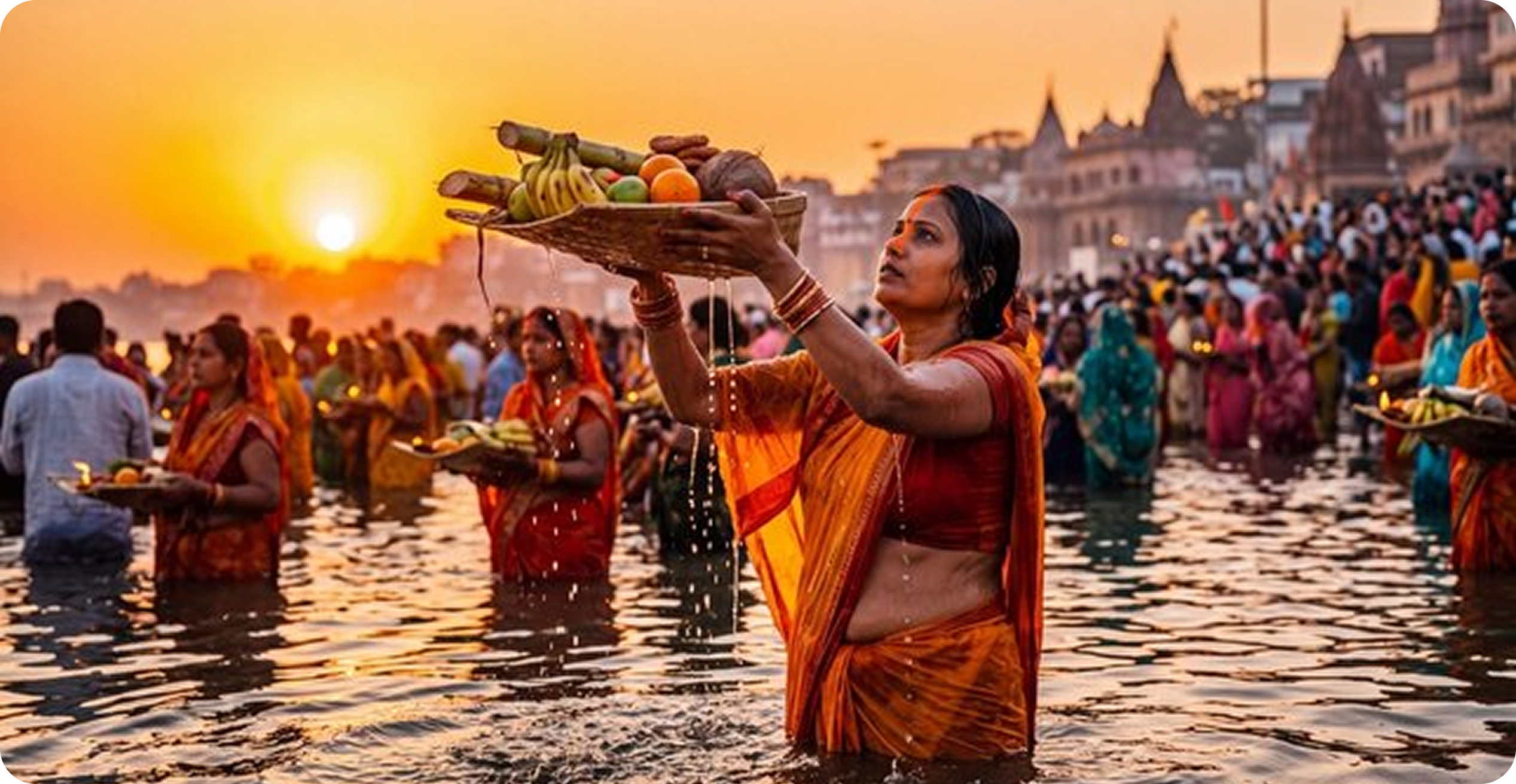
There are many ways to worship the sun. But there is one festival in India where people stand in rivers, hold baskets of fruits and sweets, and wait patiently for the sun to set. The following morning, they return to do it all over again, this time to welcome the first light of the day. It is called Chhath Puja. There is something unusual about a festival that gives equal importance to the setting sun and the rising sun. Most of us are attracted to beginnings. We celebrate the first day of a new year, the first rain, a new home, a new job and almost anything that promises a fresh start. Chhath asks us to pause for something else, to acknowledge what is coming to an end.
What is Chhath Puja?
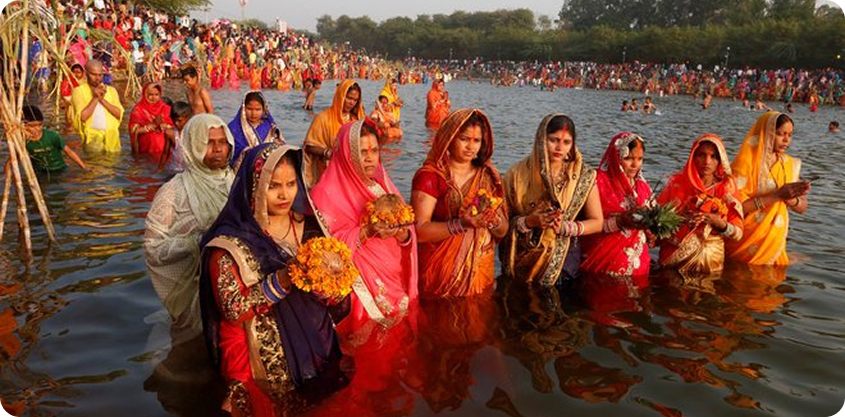
Chhath Puja is one of the most significant Hindu festivals dedicated to Surya Dev, the Sun God, and Chhathi Maiya, also associated with Shashthi Devi. It is observed primarily in Bihar, Jharkhand, eastern Uttar Pradesh and parts of Nepal. Over the years, migration has carried the festival far beyond these regions. Today, Chhath celebrations can be seen in cities such as Delhi, Mumbai, Kolkata, Bengaluru and other parts of India where communities have established their traditions. The word Chhath is associated with the sixth day of the lunar fortnight. The main worship takes place on Kartik Shukla Shashthi, the sixth day of the bright fortnight in the Hindu month of Kartik. The festival is also known as Surya Shashthi, Dala Chhath and Chhath Mahaparv. Although Kartik Chhath is the most widely celebrated observance, Chhath is also observed during the Chaitra month in spring. At its heart, the festival is an expression of gratitude towards the Sun, whose energy sustains life, crops, seasons and the natural world. But Chhath is not simply about looking towards the sky and offering prayers. It involves a carefully followed four-day sequence of purification, fasting, food preparation and offerings.
The story and history behind Chhath Puja
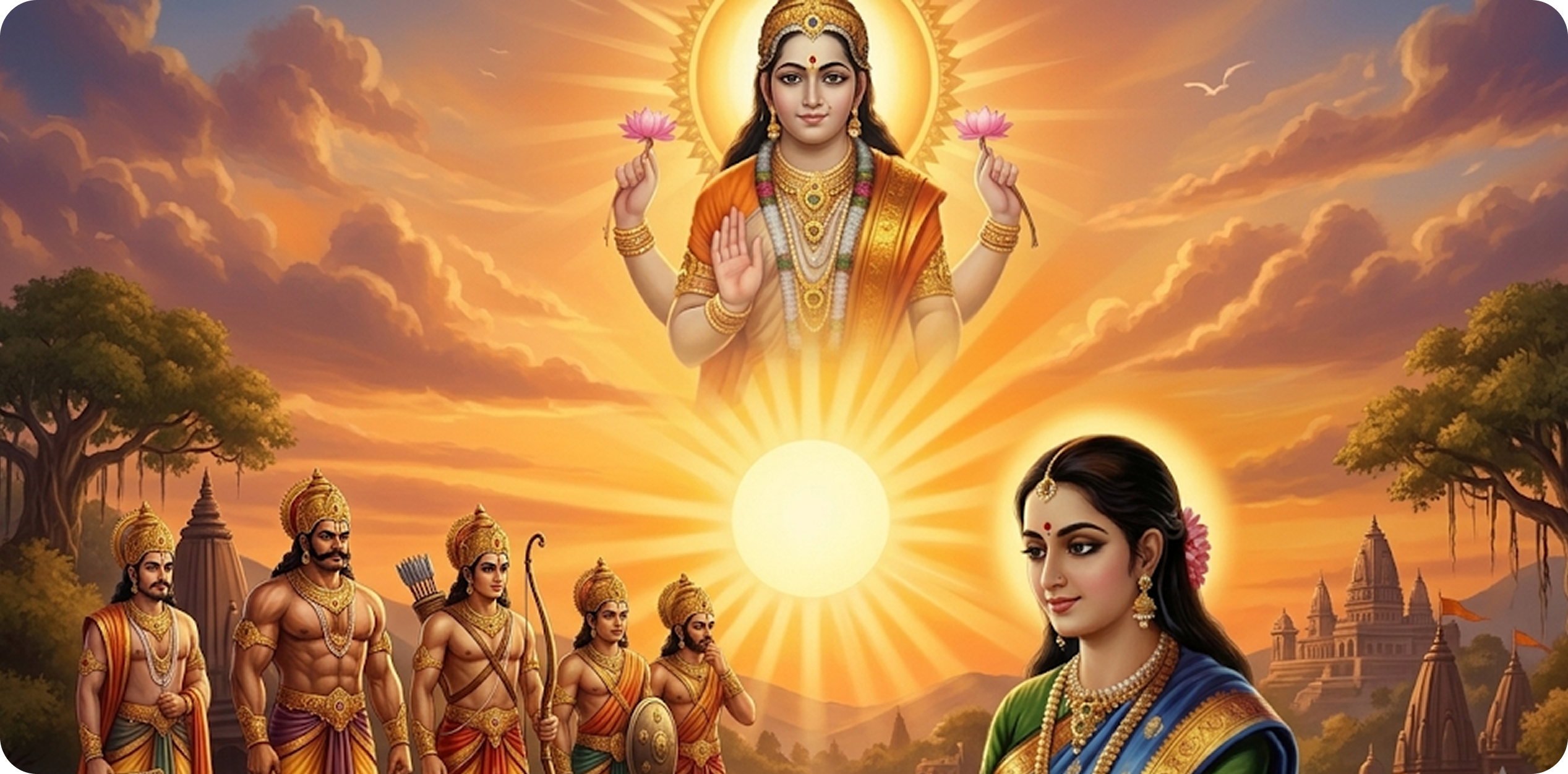
In the Rigveda, hymns are dedicated to Surya and other solar deities. The sun is understood not merely as a source of light but as a life-giving force connected with energy, health and the rhythm of nature. Chhath carries this reverence into everyday life. Unlike many religious observances that centre around a temple or a priest, Chhath is often performed directly by devotees in the presence of the natural elements. The river, the earth, the water and the sun become part of the worship itself. There are also several traditional stories associated with the festival.
The connection with the Mahabharata
One popular tradition connects Chhath with Karna, the son of Surya Dev in the Mahabharata. Karna is remembered as a devoted worshipper of the Sun God. According to popular retellings, he offered prayers while standing in water and distributed gifts to those in need. His association with Surya has become part of the stories through which people explain the festival’s connection with sun worship.
The story of Draupadi and the Pandavas
Another popular belief links Chhath to Draupadi and the Pandavas. According to a traditional account, Draupadi observed sun worship and performed rituals seeking divine blessings during a difficult period in the Pandavas’ lives. These stories are part of the festival’s religious folklore. Different communities and families may narrate them differently, and there is no single universally accepted account of Chhath’s origin. What remains consistent is the central idea: gratitude, discipline, family well-being and devotion to the natural force that makes life possible.
Why does Chhath Puja worship both the setting and rising sun?
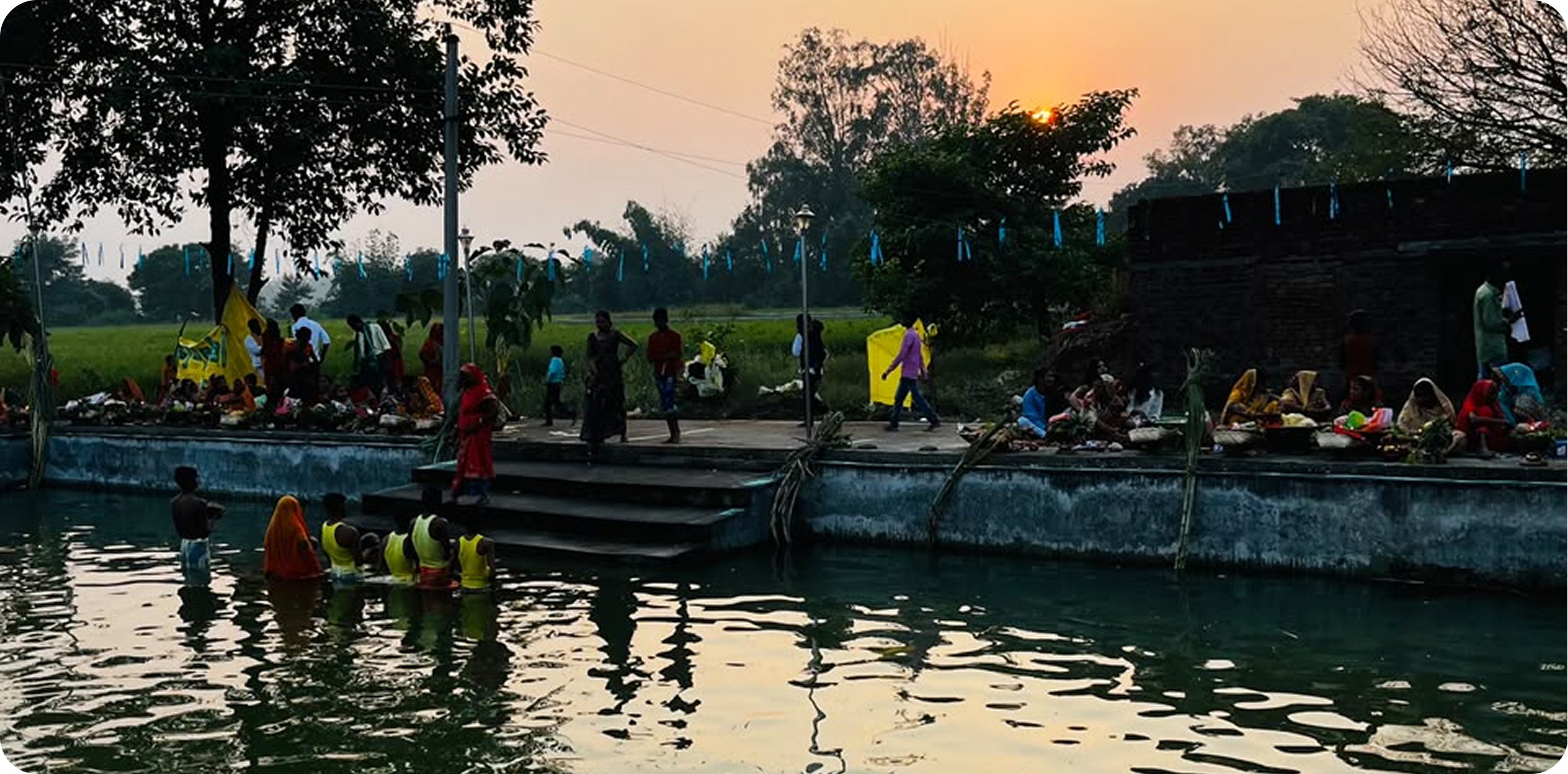
This is perhaps the most recognisable feature of Chhath. On the third day, devotees offer Sandhya Arghya to the setting sun. The next morning, they return to offer Usha Arghya to the rising sun. Why worship something that is disappearing from the sky? The evening offering is an acknowledgement of the sun’s life-giving presence throughout the day. The morning offering welcomes its return and expresses hope for continued health, prosperity and well-being.
The four days of Chhath Puja explained
Chhath is observed over four days, with each day having its own rituals and significance. The preparations are as important as the main offerings.
Day 1: Nahay Khay – The beginning of purification
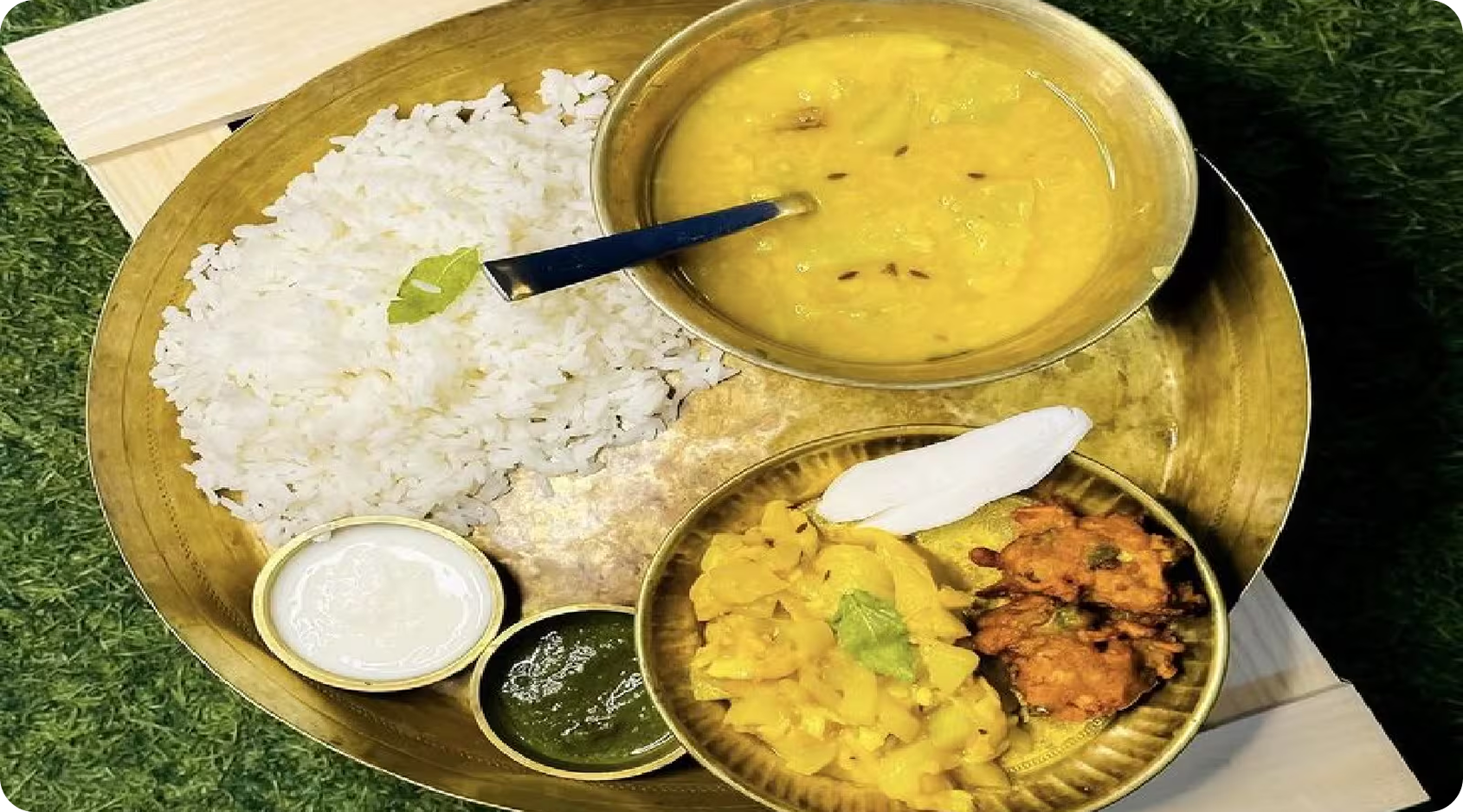
It begins with ritual bathing and the cleaning of the home and surroundings. Devotees prepare themselves for the days ahead by following a disciplined routine. In many households, the food prepared on this day is simple and traditionally cooked with particular attention to cleanliness. A common meal includes:
- Arwa rice (unpolished or traditionally prepared rice)
- Chana dal
- Lauki or bottle gourd vegetable
- Other simple preparations depending on family tradition
The food is prepared separately, often in a manner that avoids contamination from everyday cooking. Nahay Khay is about preparing the body, home and mind for the observance.
Day 2: Kharna – A day of fasting and preparation
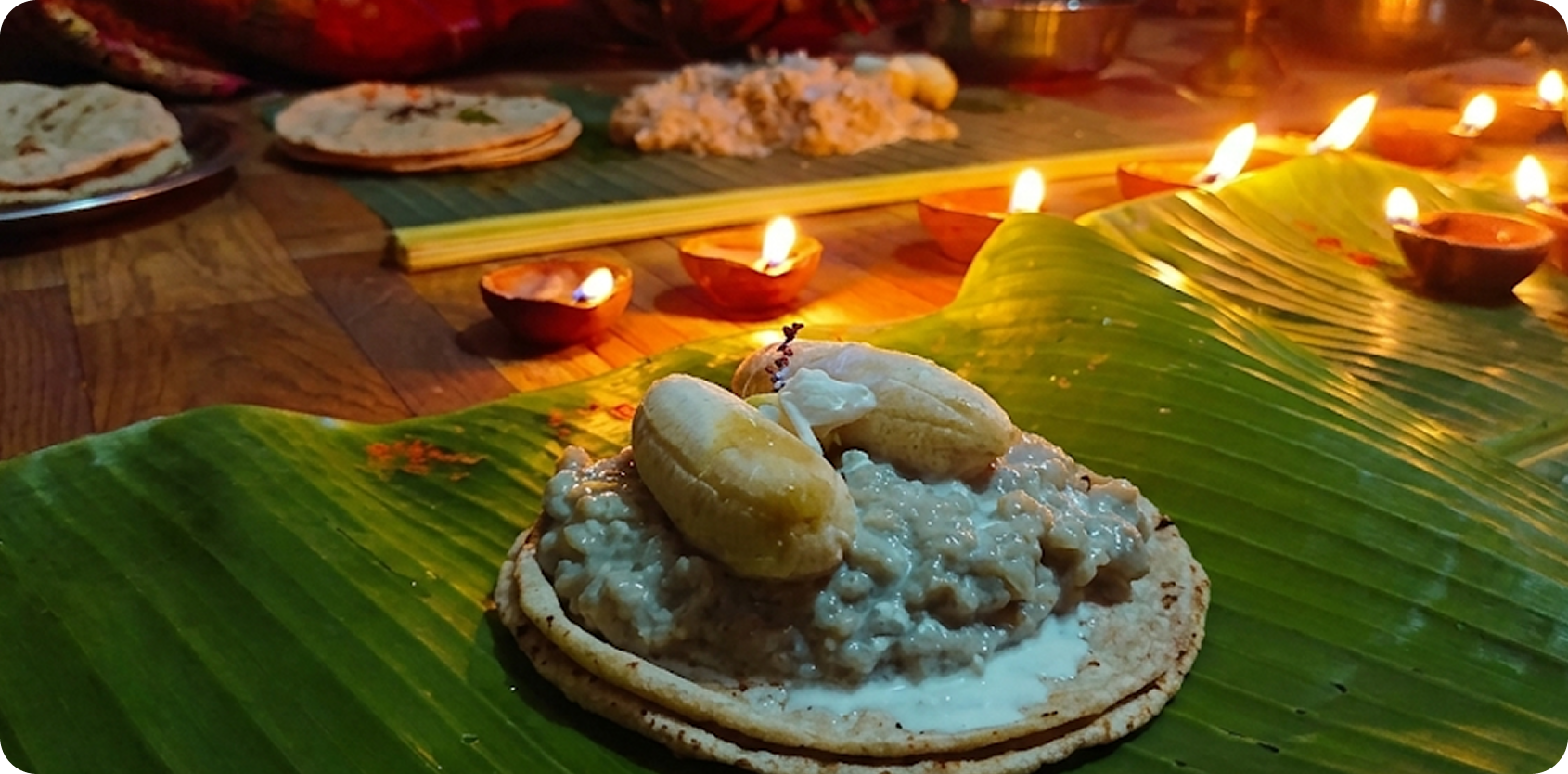
The second day is called Kharna or Lohanda. Devotees observe a fast throughout the day. In the evening, after prayers, the fast is broken with a simple meal. One of the best-known Kharna preparations is gur ki kheer, made with rice and jaggery. It is commonly accompanied by roti and sometimes bananas. The prasad is first offered in worship and then shared with family members and others. After Kharna, the main period of fasting begins. Many vratins observe a rigorous fast without food and water, traditionally lasting around 36 hours, until the final morning offering. This is one of the most demanding aspects of Chhath. It is important to remember that fasting practices vary, and the rigorous fast is undertaken by the vratin according to their tradition and capacity.
Day 3: Sandhya Arghya – Offering prayers to the setting sun
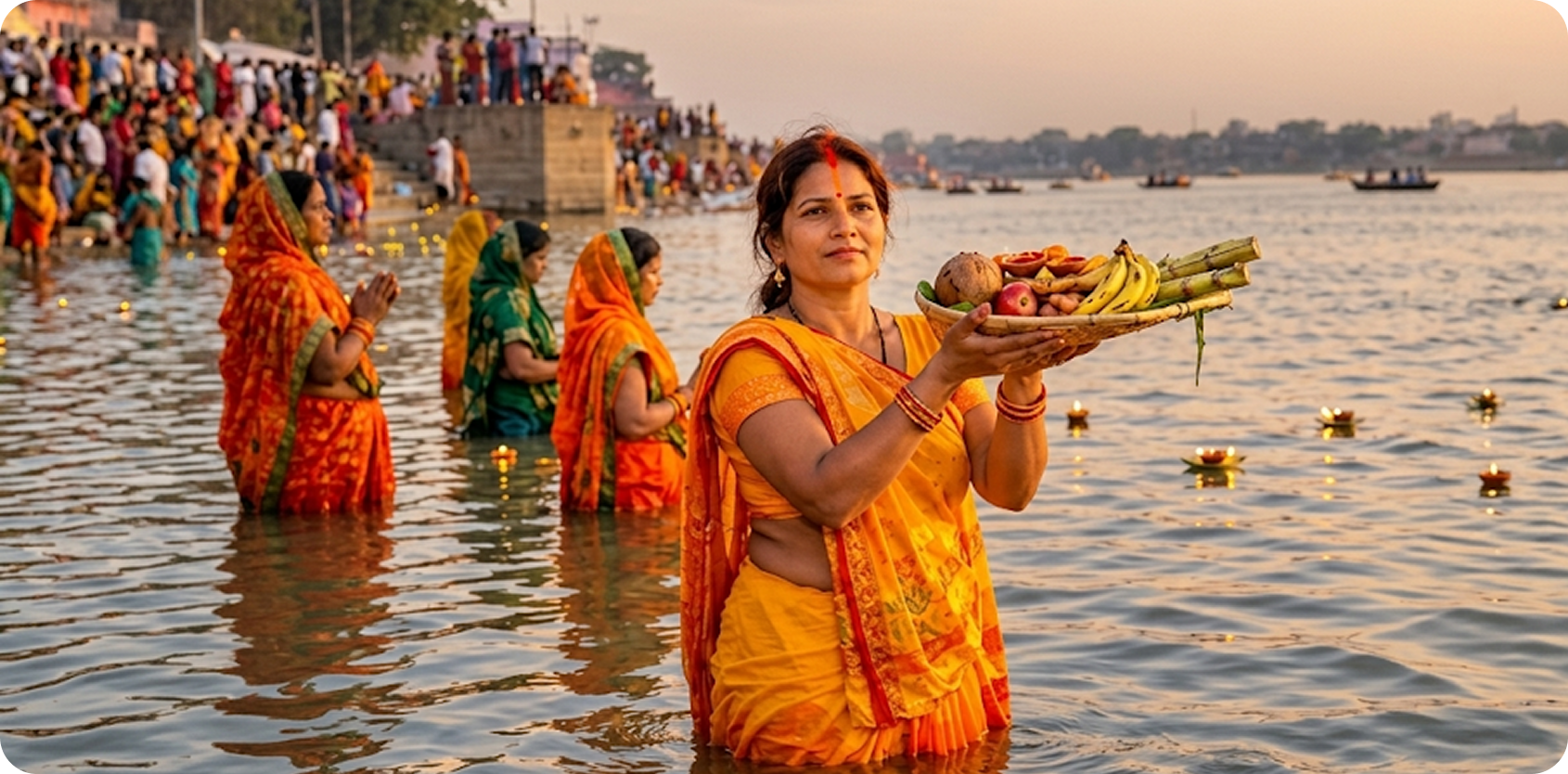
The third day is the most visually recognisable part of Chhath Puja. Families begin preparing the offerings well in advance. Fruits, sweets, sugarcane and other traditional items are arranged in bamboo baskets and winnowing trays, commonly called soop or daura. As evening approaches, devotees and their families make their way towards riverbanks, ponds, lakes and other designated water bodies. The atmosphere changes. People arrive dressed in traditional clothes. Women often wear sarees in bright colours, while men and other family members help carry the offerings. The water is filled with reflections of lamps, the sky slowly turns orange and the sound of traditional Chhath songs travels across the riverbank. As the sun approaches the horizon, devotees stand in the water and offer Arghya. Arghya is an offering of water and other ritual items made in reverence to the Sun God. The evening offering is called Sandhya Arghya or Sanjhiya Arghya. For many families, this is the moment they have been preparing for over several days.
Day 4: Usha Arghya – Welcoming the first sunlight
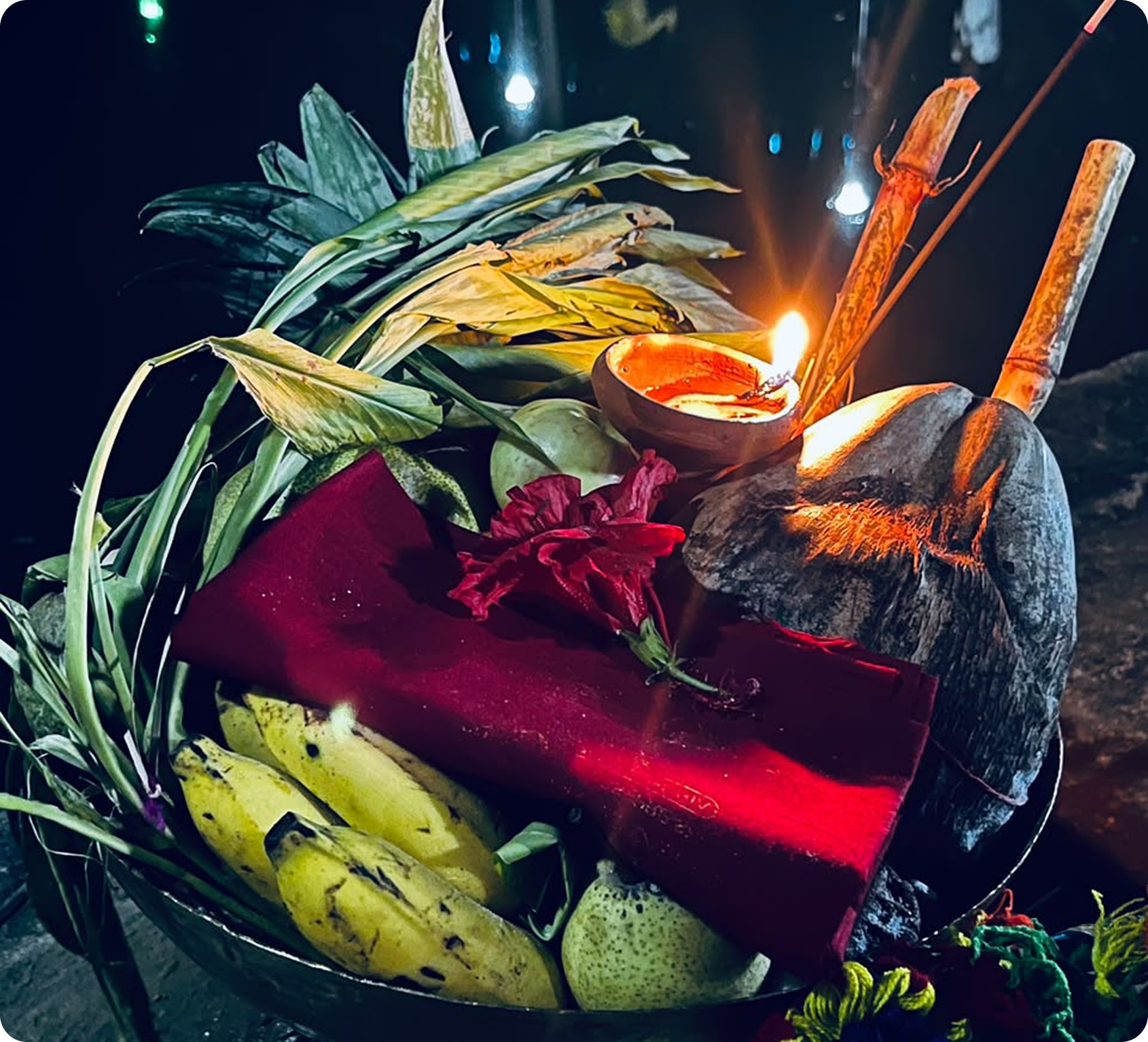
The final day begins before sunrise. Families return to the same water body, carrying the remaining offerings. The atmosphere is quieter in some ways, but the anticipation is unmistakable. As the first light appears, devotees offer Usha Arghya to the rising sun. This completes the central worship of Chhath. After the offering, the vratin performs Parana, the ritual conclusion of the fast. Prasad is distributed among relatives, neighbours and other devotees. Four days of preparation, discipline and prayer come to an end. But the memory of the festival often stays with families long after the offerings have been shared.
Thekua: The sweet that has become synonymous with Chhath
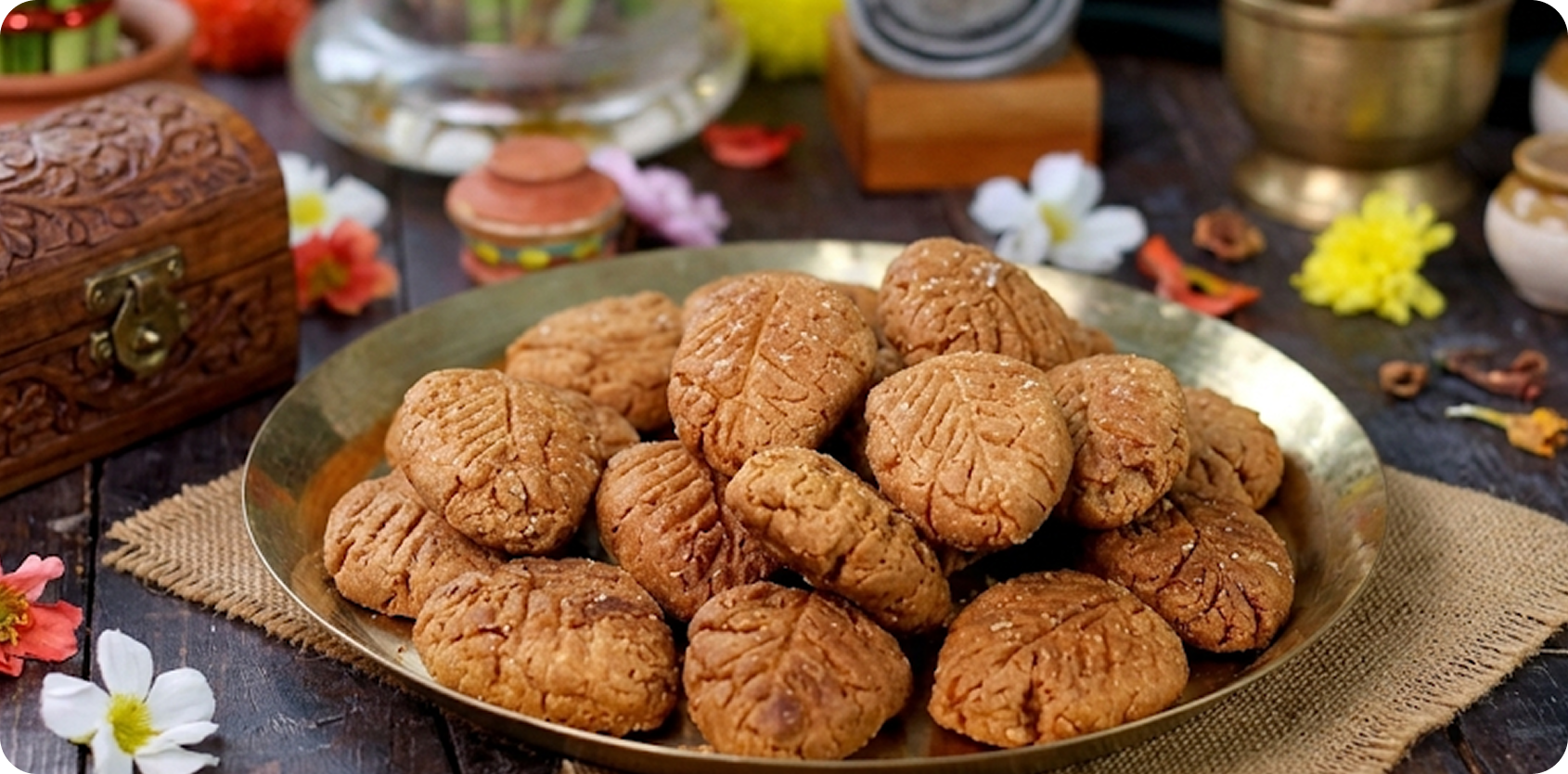
Ask someone from a Chhath-observing family what they associate most closely with the festival, and the answer may well be thekua. It is more than a sweet prepared for a religious occasion. For many families, its smell is enough to bring back memories of childhood, grandparents, crowded kitchens and the excitement of festival preparations. Thekua is traditionally made using wheat flour, jaggery or sugar, ghee and sometimes ingredients such as fennel. The dough is shaped into small pieces, often pressed using traditional moulds, and fried until golden brown. Its texture is firm and crisp, and it can be stored for several days. But the significance of thekua goes beyond its taste. It is prepared as prasad and offered during Chhath worship. Along with thekua, devotees commonly offer fruits, coconuts, sugarcane, rice-based sweets and other seasonal produce.
The folk songs that carry Chhath across generations
There is another part of Chhath that deserves attention: its music. Traditional Chhath songs are deeply woven into the festival. They are heard during the preparation of prasad, while families arrange their offerings and as devotees gather at the ghats. Many songs are passed down orally, from mothers to daughters, from grandmothers to grandchildren. They speak of Chhathi Maiya, Surya Dev, family relationships, devotion, separation and the longing to return home. For people who have moved away from Bihar, Jharkhand or eastern Uttar Pradesh, these songs can feel like a journey back to their hometown. A person may live in Mumbai, Bengaluru or Delhi for most of the year. But when Chhath songs begin playing in a neighbourhood, the distance between the city they live in and the place they grew up in suddenly feels smaller. This is how traditions survive migration. Not necessarily through grand institutions, but through songs, food, family memories and the decision to continue doing something that previous generations did.
How Chhath Puja is celebrated outside Bihar
Chhath has travelled wherever its people have travelled. In Delhi, Mumbai, Kolkata, Bengaluru, Pune and Hyderabad, communities organise celebrations near rivers, lakes, ponds and designated public spaces. The surroundings may change, but the essential rituals remain familiar. In some cities, community organisations arrange temporary ghats and facilities so that devotees can observe the festival without travelling back to their hometowns. For people living away from home, Chhath can be an emotional occasion. It is a time when families reconnect, traditions are passed on to younger generations and a familiar part of home is recreated in a completely different city. This is perhaps the strongest evidence of the festival’s cultural importance: it does not depend on a particular geographical location to survive. It travels with people.
The deeper meaning of Chhath
It is tempting to describe Chhath as a festival of fasting, prayer and tradition. All of those descriptions are correct, but they do not fully explain its appeal. There is something quietly powerful about a community gathering beside a river to thank the sun. There are no complicated explanations required to understand why sunlight matters. We experience it every day. It helps crops grow, determines the rhythm of our lives and makes the natural world possible. Yet, most of the time, we take it for granted. Chhath turns that everyday relationship into an act of gratitude. It also asks something of the people observing it. Patience, discipline, preparation and a willingness to put aside ordinary comforts for a few days. And perhaps its most interesting lesson is the simplest one. We should be grateful not only when something arrives, but also for what it has given us before it leaves. The sun sets. People pray. The sun rises again. They return. For generations, this simple act has brought families together, preserved songs, kept regional traditions alive and given millions of people a reason to gather beside the water. Perhaps that is what makes Chhath Mahaparv so enduring. It does not need to compete for attention. It simply returns every year, with the same riverbanks, the same offerings and the same sun.